Fund Britain’s Waterways held a navigation authority Q&A session with Paul Burrows, Chief Executive of the Middle Level Commissioners, covering funding, boat charges, facilities, climate change and future opportunities.
Navigation Authority Q&A: Middle Level Commissioners
Date(s): 20/11/2024
to 20/11/2024
Time: 10:30 am
Location: Online

Date
20/11/2024
20/11/2024
Time
10:30 am
10:30 am
Location
Online
Online
Price
FREE
FREE
About this event
Navigation Authority Q&A: Middle Level Commissioners
Fund Britain’s Waterways held a navigation authority Q&A session with Paul Burrows, Chief Executive of the Middle Level Commissioners, on 20 November 2024. The discussion covered the history and management of the Middle Level, funding, boat charges, facilities, climate change and future opportunities for the navigation.
Questions and Answers
The questions below have been reformulated into an easy-to-read format while preserving the main points raised during the session.
Paul Burrows explained that the Middle Level forms part of the Fens of East Anglia, sitting between the North and South Levels and the Bedford Level. Navigation and flood risk management are closely linked, because the same channels, embankments, sluices and pumps support both activities.
The Commissioners were established by an Act of Parliament in 1862, building on a much older drainage history that reaches back to the seventeenth century. The system is neither simply river nor canal, but a hybrid network shaped by drainage, water management and navigation.
The Middle Level Commissioners manage around 190km of waterways, of which about 160km are navigable, together with 360km of raised embankments. Key structures include Stanground and Salters Lode sluices, locks at Ashline, Marmont Priory, Horseway and Lodes End, and the aqueduct at Mullicourt where Well Creek crosses the Main Drain.
The organisation has around 40 staff, but only a very small number are focused solely on navigation. Other teams support navigation alongside flood risk, water resources, engineering, environmental, legal, finance and operational work.
The main source of income is still drainage rate payers, including local landowners and occupiers. The Commissioners receive about £2 million from this source. They also receive special levy income through local councils, including around £600,000 from Fenland District Council and around £200,000 from other local councils.
Boat licence fees were introduced following the Middle Level Act 2018. Paul Burrows explained that navigation had historically generated significant commercial income, but this was lost as commercial traffic declined and parts of the system fell into disrepair.
Current boat income is around £200,000 per year, while navigation expenditure is usually around £400,000 to £600,000. The Commissioners are not eligible for government capital grants specifically for navigation, although they can access flood risk management grant in aid for eligible flood-related work.
The Commissioners publish transparent accounts and are keen to explore additional funding sources. Heritage interpretation and encouraging more boats to spend time away from the link route were both noted as possible opportunities.
The Commissioners currently mirror the Environment Agency charging structure because it is simpler and avoids spending limited resources on designing a separate system from scratch.
The Anglian Pass allows unrestricted access across the region and is considered more efficient than issuing individual visitor licences. The Commissioners have considered links with the CRT/EA Gold Licence scheme, but the demand has not yet been strong enough to justify a full change in arrangements. They are, however, looking at a possible subsidiary arrangement that would return some Gold Licence income to the Middle Level.
Licence compliance has improved through enforcement and closer work with marinas, although capacity remains limited. The Commissioners have also been working with the Environment Agency at the edges of the system, trialling debt management approaches and updating protocols for unlicensed boats.
There is no requirement for every boat to have a home mooring, but overstaying at mooring sites remains an issue.
Since the introduction of charges, the Commissioners have delivered new moorings on Ramsey High Lode, refurbished lock moorings and installed nine rural moorings with footpath access. Marmont Priory lock gates have been replaced, Salters Lode lock has been desilted, and work has continued on abandoned boats, visitor moorings and water provision at the Commissioners’ offices.
The Commissioners are reviewing rural moorings and taking account of IWA recommendations. They are also looking for efficient opportunities to make improvements while teams are already out on other work.
As part of the passage of the Middle Level Act, there was a commitment to ringfence 20% of navigation income for work towards IWA minimum facility standards. Stanground is seen as easier to progress because the Commissioners own much of the surrounding land. Elsan and rubbish facilities are planned, although there is not yet a confirmed timescale.
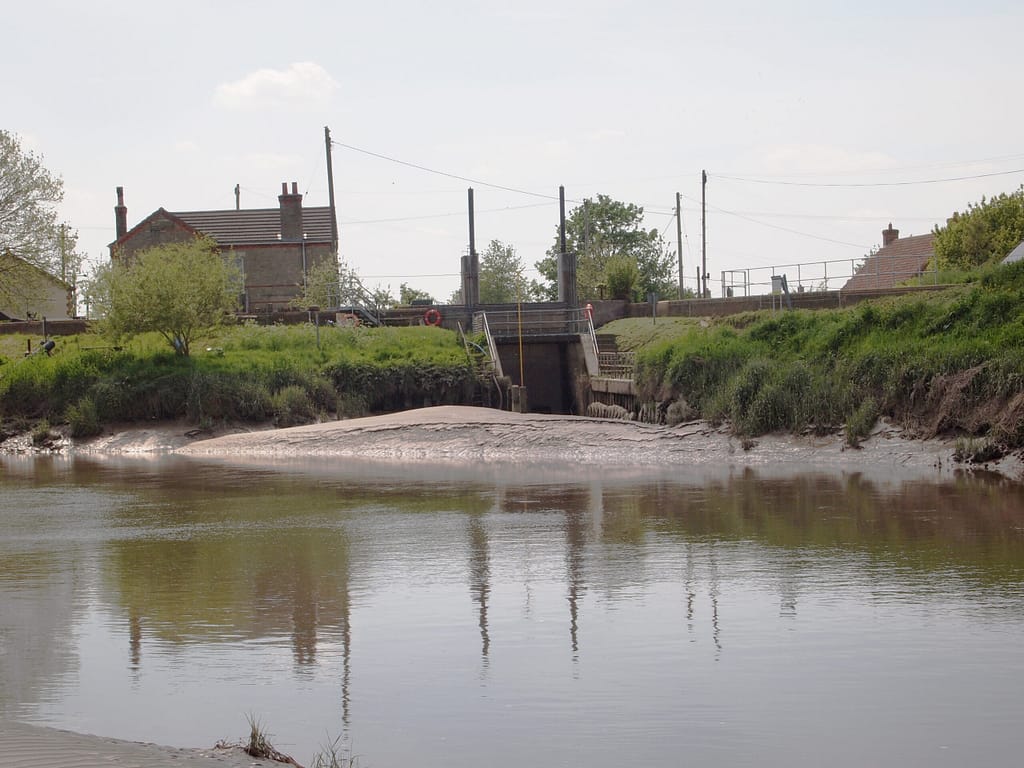
At Salters Lode, the Commissioners are still seeking permission for a water point and are discussing wider opportunities with the Well Creek Trust and local villages. Further possibilities at places such as Ramsey and Benwick are also being explored.
Paul Burrows explained that the Denver crossing beyond Salters Lode is outside the direct control of the Middle Level Commissioners, although it is clearly important to Middle Level navigation.
The Environment Agency was expected to desilt ahead of the next boating season, but longer-term arrangements remained uncertain. The crossing has always been challenging, and the problem is being made harder by sea level rise, bed level rise and the rate at which silt returns.
The Commissioners had chosen not to open Salters Lode until silt had been cleared because debris in the silt could have prevented the guillotine gate from closing. The safety of the tidal defence had to take priority.
Paul Burrows said the issue sits within a wider climate and adaptation challenge that is beyond any single navigation authority. Early information is important for local businesses that rely on the route, and contingency planning may be needed if the tidal stretch becomes harder to use.
Paul Burrows confirmed that exploration beyond the previous stated limit of navigation on Monk’s Lode is supported by the Middle Level Commissioners.
The usual regulations still apply, and the Commissioners intend to update the navigation notes. They see this as a positive story and would welcome a joint IWA/MLC press release to publicise the increased navigable length more widely.
The proposed Fens Reservoir near Chatteris will rely on the Middle Level system, so the Commissioners are working closely with Anglian Water.
Paul Burrows said the Commissioners see the opportunities as greater than the risks. The reservoir could become a new tourism destination, create freight possibilities and support wider navigation benefits, provided disruption during construction is properly managed.
The Commissioners share practice with neighbouring Environment Agency teams and with the Canal & River Trust, particularly around facilities and licensing.
Paul Burrows said the organisation has limited capacity to take part in wider sector activity, but it has put significant effort into explaining what it does and promoting its work. This has been welcomed by boaters and has helped raise understanding of the Middle Level’s role.
Paul Burrows noted that much environmental legislation is not new, but the Environment Act 2020 has shifted the emphasis towards enhancing the environment, rather than simply conserving it.
He said the ecology of drainage ditches is often undersold, describing them as “inverted hedgerows”. The Commissioners are keen to enable volunteering, but recent experience shows that volunteer work needs to be carefully planned, especially where environmental or safety issues may arise.
IWA’s Waterway Recovery Group was noted as a source of support, with strong health and safety practice for waterway recovery work.
Paul Burrows said the major challenge is climate change. It is impossible to separate its impact on navigation from its impact on flood control, water transfer and the wider waterway system.
Ageing infrastructure is another serious pressure, made harder by the lack of public investment. At the same time, the proposed Fens Reservoir could create an opportunity for local towns to reconnect with and make better use of their waterways.
When asked what Fund Britain’s Waterways could do, Paul Burrows said the most important role is to keep highlighting the importance of waterways, not only to government but also to business and local decision-makers. He stressed again that navigation should not be separated from flood control and water transfer when making the case for investment.
Venue details
Online
Video conference